// service · Assessments
What a plant OT risk assessment should produce
IEC 62443-3-2 high-level assessment in three weeks. Zones, conduits, and the exposures worth funding this year. Findings become Resilion tasks.
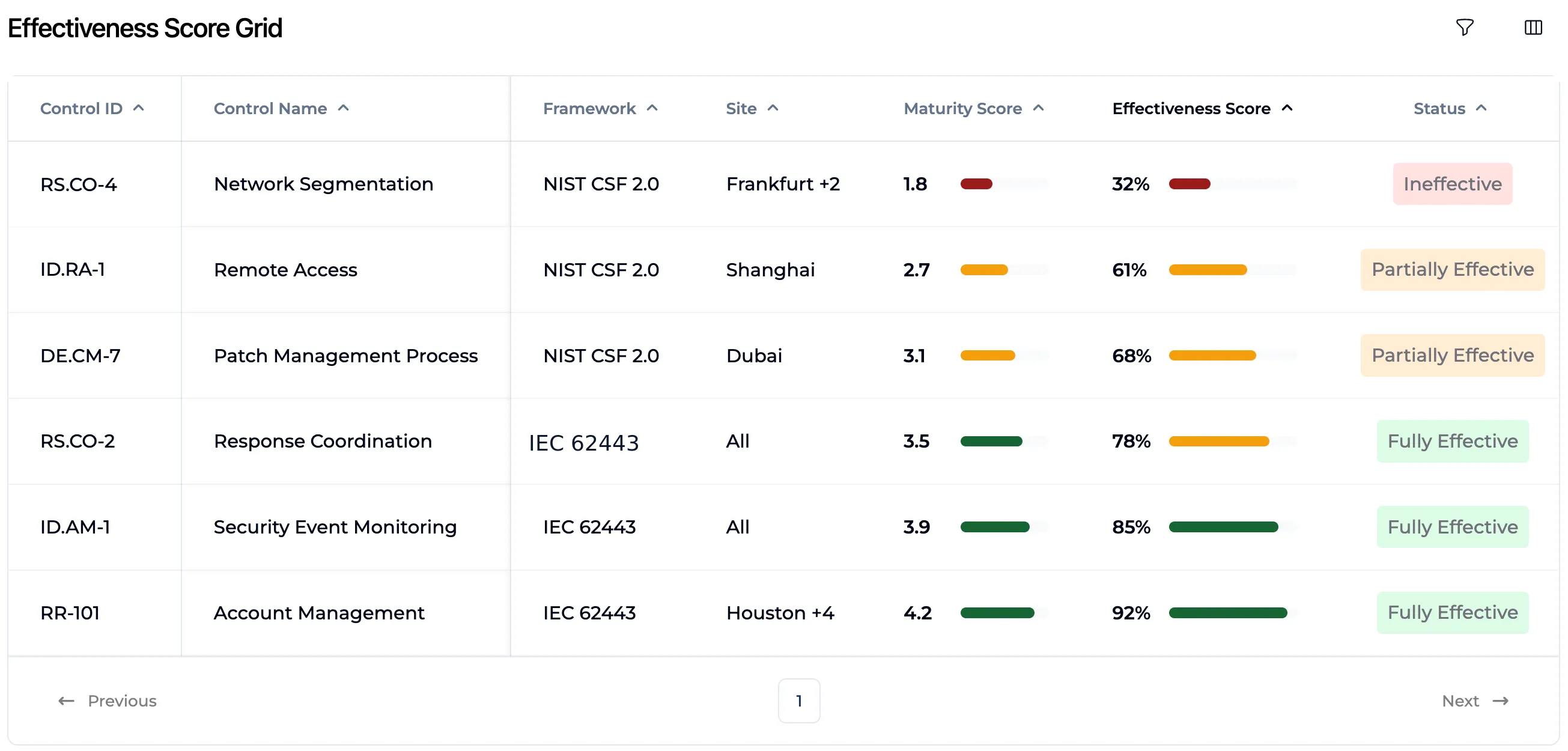
Most plant cyber programs need a starting point, not a thesis. Leadership wants to know where the biggest exposure sits, what would break first, and what is worth funding this year. A full detailed assessment takes months and a budget the plant does not have yet. A spreadsheet gap analysis tells you nothing about your plant.
This assessment runs the IEC 62443-3-2 high-level method against your site: partition the system into zones and conduits, rate the risk to each, and surface the handful of exposures that actually threaten production. Three weeks of fieldwork, not three months.
You leave with a ranked view of plant risk, the scenarios most likely to take a line down, and a funded first move your board will approve. Every finding lands as a task in Resilion, so the assessment starts the program instead of closing a budget line. The clause-level path for 2-1, 3-2, and 3-3 is IEC 62443 in practice.
// FAQ
Questions about Plant OT risk assessment in three weeks
- What is a high-level OT risk assessment?
- A rapid IEC 62443-3-2 partition of the plant into zones and conduits, scored for the highest-likelihood, highest-impact cyber risks to production, designed to give leadership a fundable starting point without a months-long engagement.
- How long does it take?
- About three weeks, versus three months for a full detailed assessment. It is scoped to answer where the biggest exposure sits and what to fund first.
- How is it different from a detailed risk assessment?
- The high-level pass finds and prioritizes the exposure; the Plant Detailed Risk Assessment then models loss-of-view and loss-of-control scenarios zone by zone with the depth a CapEx decision needs.
See this work on your sites
Book a 30-minute demo. Bring the last assessment and the sites in the first wave.